You fall asleep without much trouble. Then your eyes open, the room is dark, and the clock says 3 AM. If this keeps happening, you are not alone, and the cause is often something you can work on.
If you often wake up at 3 AM and can’t drift off again, you’re far from alone.
Brief wake-ups are a normal part of sleep. Most people drift back off and never remember them. The problem starts when you become fully alert and cannot settle again.
This guide covers why that happens, what may help, and when it is time to talk to a doctor.
What Is Happening in Your Body at 3 AM?
Sleep moves in cycles through the night. Deeper sleep tends to come earlier, while lighter sleep becomes more common toward morning. That means you are easier to wake in the second half of the night.
In lighter sleep, a small trigger can wake you. It might be a noise, a full bladder, or a racing thought. Once you are awake and checking the time, your mind can switch on quickly.
Waking at the same hour may feel strange, but it often just reflects your regular sleep rhythm. There is usually no hidden meaning in the exact time on the clock.
Common Reasons You Wake Up at Night
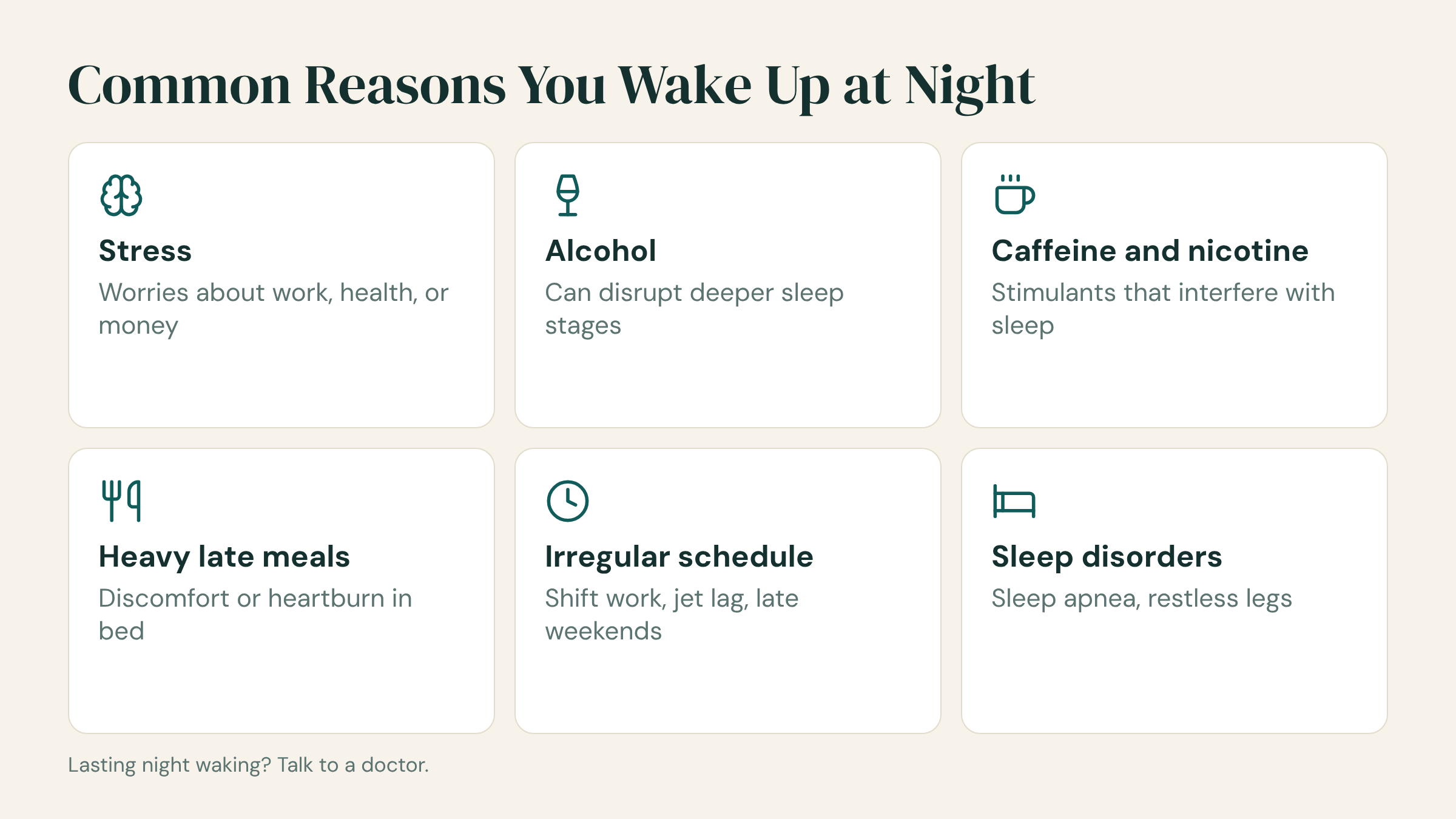
Stress and Worry
Mayo Clinic lists stress as a leading cause of insomnia. Worries about work, health, money, or family can keep your mind active. Major life events, such as a loss or job change, can also disrupt sleep.
Alcohol
A drink may help you fall asleep, but it can work against you later. Mayo Clinic notes that alcohol can disrupt deeper sleep stages. Many people notice they wake up during the second half of the night after drinking.
Caffeine and Nicotine
Both are stimulants that can interfere with sleep. Caffeine from an afternoon coffee may still be active at bedtime. Some over-the-counter products also contain caffeine, so check labels.
Heavy Late Meals
A large meal late in the evening can cause discomfort when you lie down. It can also trigger heartburn, which may wake you in the night.
An Irregular Schedule
Your body clock works best with routine. Shift work, jet lag, late weekends, and long naps can all confuse it.
Medicines
Some antidepressants, asthma drugs, and blood pressure medicines can affect sleep. Do not stop a prescribed medicine on your own. Ask your doctor or pharmacist whether the timing or the medicine could be changed.
Health Conditions
Chronic pain, reflux, diabetes, an overactive thyroid, asthma, and heart disease are all linked with insomnia. Anxiety and depression are too, and waking very early can be a sign of depression.
Sleep Disorders
Sleep apnea and restless legs syndrome can break up sleep, often without you knowing why. Loud snoring, gasping, or feeling exhausted after a full night in bed are good reasons to get checked.
What to Do When You Wake Up at 3 AM
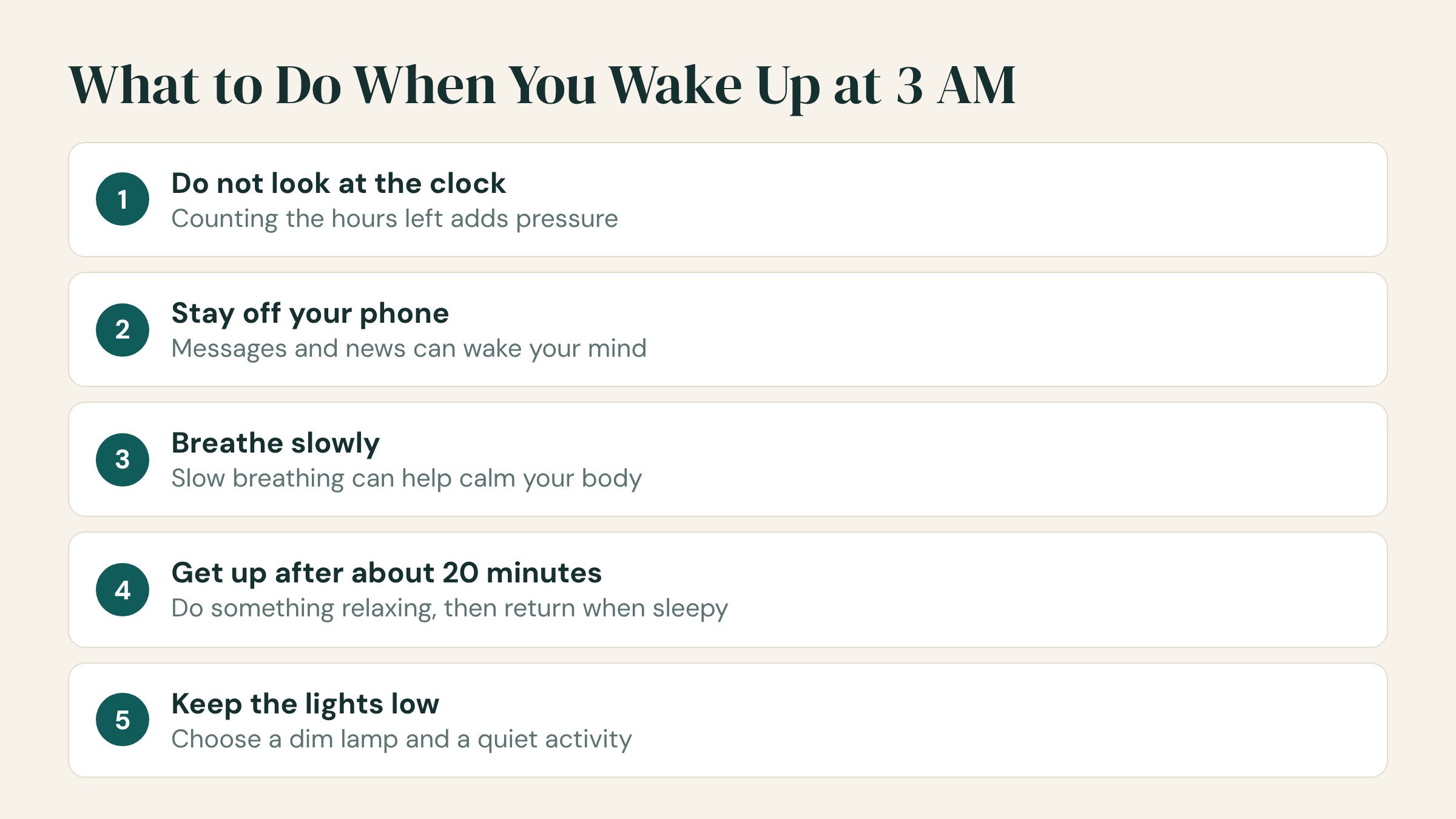
What you do in those first few minutes matters. These steps may help you settle again:
- Do not look at the clock. Counting the hours left usually adds pressure.
- Stay off your phone. Messages and news can pull your mind fully awake.
- Breathe slowly. Slow breathing or gentle muscle relaxation can help calm your body.
- Get up if you cannot settle. Mayo Clinic suggests leaving bed if you are still awake after about 20 minutes. Do something relaxing, then return when you feel sleepy.
- Keep the lights low. A dim lamp and a quiet activity work better than bright screens.
Daytime Habits That May Help
Better nights often start during the day. Small changes can add up over a few weeks.
- Keep steady sleep times. Go to bed and get up at the same times every day, including weekends.
- Limit naps. Keep them under an hour and avoid napping late in the day.
- Stay active. Regular exercise supports sleep, but avoid intense workouts right before bed.
- Get outside. Time outdoors each day may also help.
- Watch evening drinks. Be careful with caffeine and alcohol, and avoid big meals close to bedtime.
- Keep your bedroom restful. A cool, dark, quiet room is best.
Try a Worry Plan
If your mind races at night, give your worries a set time earlier in the day. Spend ten minutes writing down what is on your mind and one next step for each item.
Mayo Clinic recommends resolving concerns before bed or writing them down and setting them aside. When a worry shows up at 3 AM, you can remind yourself it already has a place on your list.
Do Supplements Help?
Many people reach for a supplement, but the evidence for staying asleep is limited.
According to the National Center for Complementary and Integrative Health, melatonin may shorten the time it takes to fall asleep. It does not appear to improve overall sleep quality or nighttime waking, though. The same source says magnesium research is very limited, and trials do not show that chamomile clearly helps.
If you want to try a supplement, talk to a healthcare professional first. This matters most if you take medication, because some products can interact with it.
When to See a Doctor
Occasional bad nights are common. Short-term insomnia can last days or weeks, often after a stressful event. Chronic insomnia lasts three months or more.
Talk to a doctor if night waking affects your daily life. Also speak up if you notice any of these:
- Loud snoring or gasping during sleep
- Waking often to urinate
- Pain, heartburn, or a racing heart at night
- Low mood, or waking very early and feeling hopeless
- Heavy daytime sleepiness, especially when driving
A doctor can look for causes and may refer you to a sleep center if a sleep disorder is suspected.
The Bottom Line
Waking at 3 AM is usually linked to lighter sleep plus a trigger such as stress, alcohol, or a change in routine. Start with steady sleep times, calmer evenings, and a plan for your worries.
If the pattern lasts for weeks or affects your days, get it checked. Good sleep is worth the effort, and help is available.
Related articles
- Foods and Drinks That May Help You Relax at Night
- How Much Sleep Do Adults Really Need?
- Cortisol Explained: What It Does and Why It Matters
This article is for general information only and is not medical advice. Talk to a healthcare professional about your symptoms, and before starting any supplement, especially if you take medication or have a medical condition.