
Every day, your body comes into contact with bacteria, viruses, fungi, and other things that could make you sick. Most of the time you never notice, because your immune system deals with them quietly in the background. When you do feel unwell, with a fever, a sore throat, or swollen glands, much of what you feel is that same system at work.
This simple guide explains how your immune system works and how to support it.
Understanding how immunity works makes it easier to judge the many products promising to “boost” it. This guide explains the main parts of the immune system, how they cooperate, what can go wrong, and which everyday habits are linked with keeping it working well.
What Is the Immune System?
The immune system is not a single organ. It is a network of cells, tissues, organs, and proteins spread throughout the body. According to Cleveland Clinic, its jobs include keeping invaders out, destroying them or limiting the harm they cause, repairing damaged tissue, and adapting to new threats.
Its targets include bacteria, viruses, fungi, and parasites. It also helps deal with abnormal cells in your own body, including some cancer cells.
The Main Parts of the Immune System
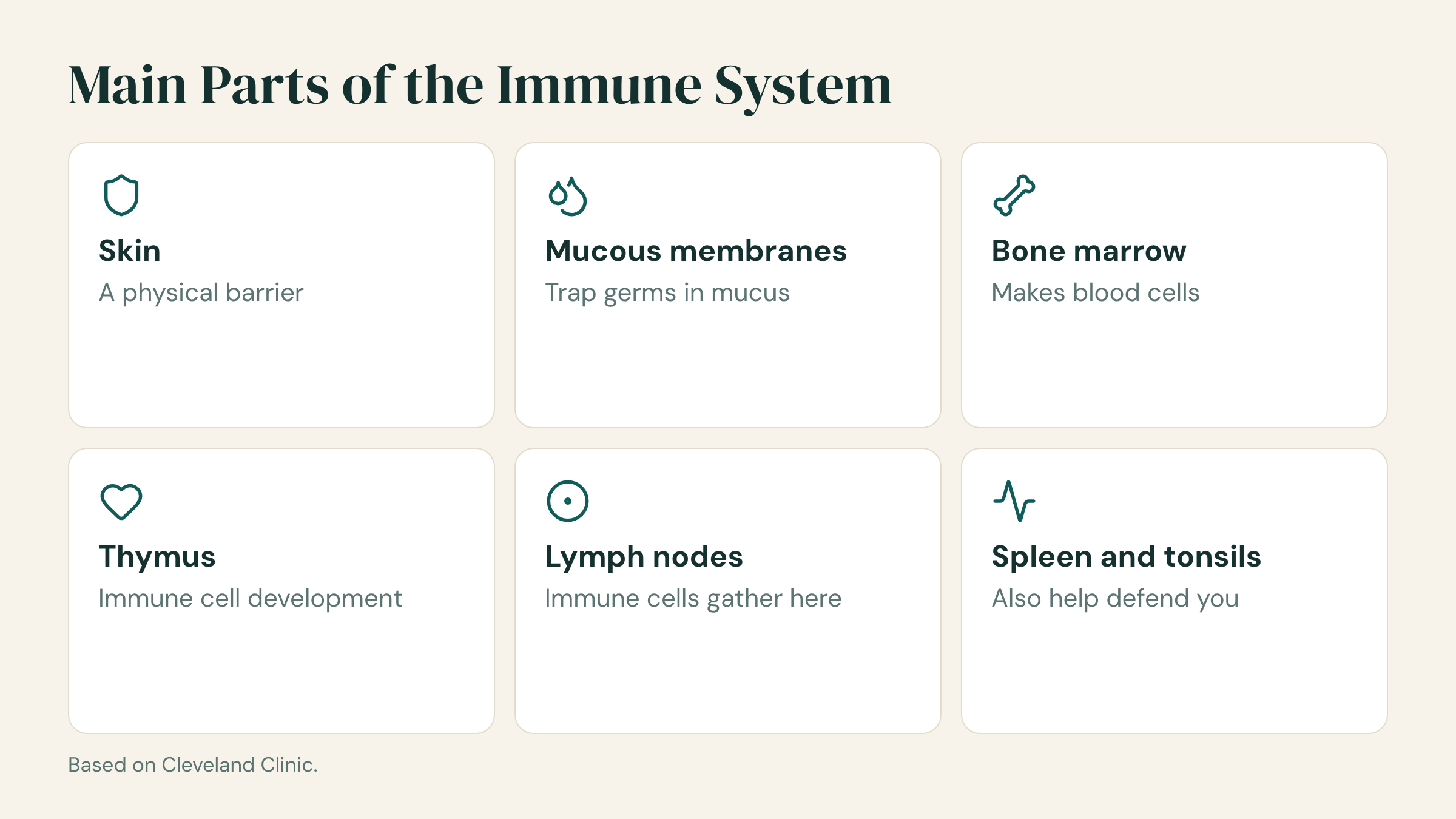
Several parts of the body play a role:
- Skin: A physical barrier that keeps many germs out.
- Mucous membranes: The moist linings of the nose, mouth, and gut, which trap germs in mucus.
- Bone marrow: Where blood cells, including white blood cells, are made.
- Thymus: A small organ in the chest involved in immune cell development.
- Lymph nodes: Small structures where immune cells gather and meet germs. This is why glands in your neck can swell when you have an infection.
- Spleen, tonsils, and adenoids: Tissues that also take part in immune defense.
The Two Branches: Innate and Adaptive Immunity
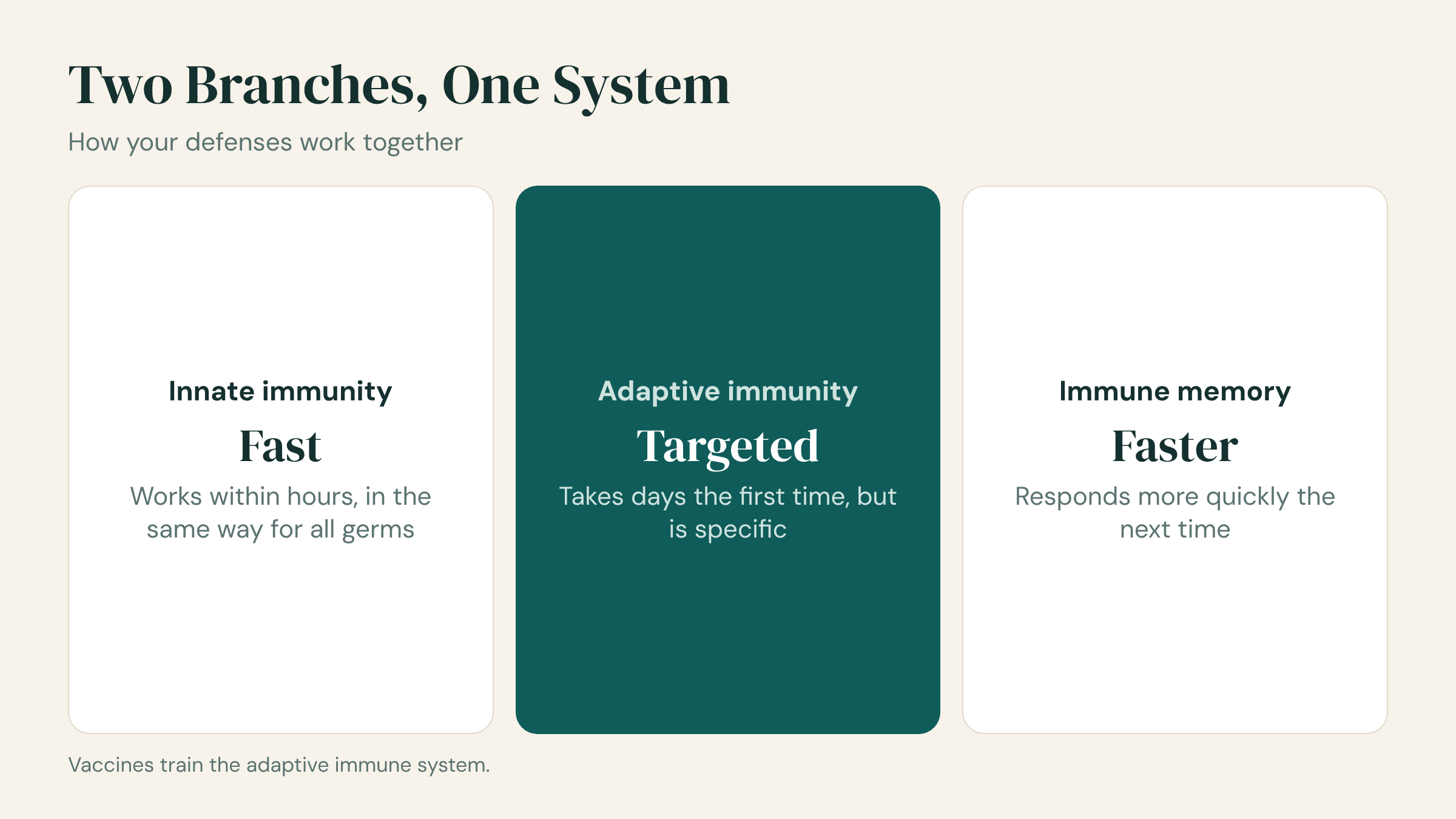
Your immune system has two branches that work together. A simple way to picture them is as a rapid response team and a specialist unit.
Innate Immunity: The First Responders
Innate immunity is the protection you are born with. It responds quickly, often within hours, and reacts in the same general way to anything that should not be there. It does not learn or remember specific germs.
Key players include phagocytes, sometimes called scavenger cells, which engulf and digest germs, and natural killer cells, which find and destroy infected or abnormal cells. Inflammation is also part of this response. The redness, warmth, and swelling around a cut are signs that immune cells and fluid are moving to the area.
Adaptive Immunity: The Specialists
If germs get past the first line of defense, the adaptive immune system takes over. It targets the specific germ causing the problem. Because it has to identify the invader and build a tailored response, it can take days to get going the first time it meets a germ.
Two types of white blood cells are central here:
- T cells: Some help activate the immune response, while others destroy infected cells. Some become long-lived memory cells.
- B cells: These can become plasma cells that produce antibodies. Some also become memory cells.
What Antibodies Do
Antibodies are proteins that circulate in your blood. Each one binds only to a matching target, called an antigen. According to InformedHealth.org, antibodies neutralize germs and their harmful substances, mark germs so scavenger cells can destroy them more easily, and activate other proteins that support the immune response.
This shows how closely the two branches are linked. Antibodies made by the adaptive system also help the innate system do its job.
Why Immune Memory Matters
Immune memory is one of the system’s most useful features. After an infection clears, some T cells and B cells remain as memory cells. If the same germ returns, your body responds much faster. The second infection may be milder or may go unnoticed altogether.
Vaccines rely on this same process. They train the adaptive immune system to recognize a germ without you having to go through the full illness first.
Memory also has limits. The common cold can be caused by many different viruses, and some germs change over time. That is one reason you can catch a cold again and again, even though your immune system is working normally.
What Happens When the Immune System Goes Wrong
Good immune health is about balance. Problems can arise when the system is too weak or too active.
- Underactive immunity: Some people are born with immune disorders. Others develop weaker immunity because of conditions such as HIV, type 2 diabetes, or cancer, or from treatments such as chemotherapy, corticosteroids, and immunosuppressant drugs.
- Overactive immunity: Allergies happen when the immune system reacts to harmless substances. In autoimmune diseases such as lupus and rheumatoid arthritis, it attacks the body’s own tissues. Sepsis is a dangerous, extreme response to infection.
This balance is one reason the word “boost” can be misleading. A stronger reaction is not always a healthier one. What you generally want is an immune system that responds appropriately.
Everyday Habits That Support Immune Function
Cleveland Clinic lists several habits that help keep the immune system healthy:
- Eating nutritious foods such as fruits, vegetables, lean proteins, and whole grains
- Exercising regularly
- Maintaining a healthy weight
- Getting enough sleep
- Staying current on recommended vaccines
- Avoiding tobacco
Do You Need an Immune Supplement?
The NIH Office of Dietary Supplements explains that a varied diet usually provides enough vitamins and minerals for immune function. Supplements mainly help when someone has a deficiency, and for most people they do not prevent infections or speed recovery.
If you are thinking about a supplement, it helps to look at each ingredient rather than the promise on the label. Some, such as vitamin C and zinc, have been studied for colds, with modest and specific results. Remember that supplements can interact with medications, so tell your healthcare provider what you take.
When to Talk to a Doctor
Consider seeing a healthcare professional if you have persistent fatigue, unexplained fever or weight loss, night sweats, swollen lymph nodes that do not go down, or recurring rashes or inflammation. It is also worth checking in if you seem to be getting sick more often than is usual for you.
The Bottom Line: How Your Immune System Works
Your immune system is a coordinated network that uses fast general defenses and slower, targeted ones. Its memory helps protect you against germs you have met before, and it is also the reason vaccines work. Sleep, nutrition, activity, vaccines, and avoiding tobacco are the basics. If you have a specific concern, a healthcare provider can give you advice that fits your situation.
Related articles
- How Aging Changes Your Immune System
- Best Foods for Immune Support
- Why You Keep Getting Sick: Common Reasons
For more detail, see the official guidance from MedlinePlus: Immune System and Disorders.
This article is for general information only and is not medical advice. Talk to a healthcare professional about your symptoms, and before starting any supplement, especially if you take medication or have a medical condition.
1 Comment on “How Your Immune System Works: A Simple Guide”