
A little stress is a normal part of life. It can help you react to danger or meet a deadline. Problems start when your body stays on high alert for weeks, months, or longer.
This guide explains how stress affects your body over time and what you can do about it.
Long-term stress can affect almost every system in your body. Understanding those effects can help you spot warning signs early and take action.
What Happens When You Feel Stressed?
When your brain senses a threat, your body releases stress hormones. Mayo Clinic explains that adrenaline speeds up your heart, raises your blood pressure, and gives you a burst of energy.
Cortisol, the main stress hormone, raises blood sugar and helps your brain use it. It also slows functions you do not need in an emergency, such as digestion and growth.
This response is useful for short bursts. Once the threat passes, your body should settle back to normal. With ongoing stress, it may not get the chance.
Stress and Your Muscles
Muscles tighten when you are stressed. It is a natural reflex that helps protect your body from injury.
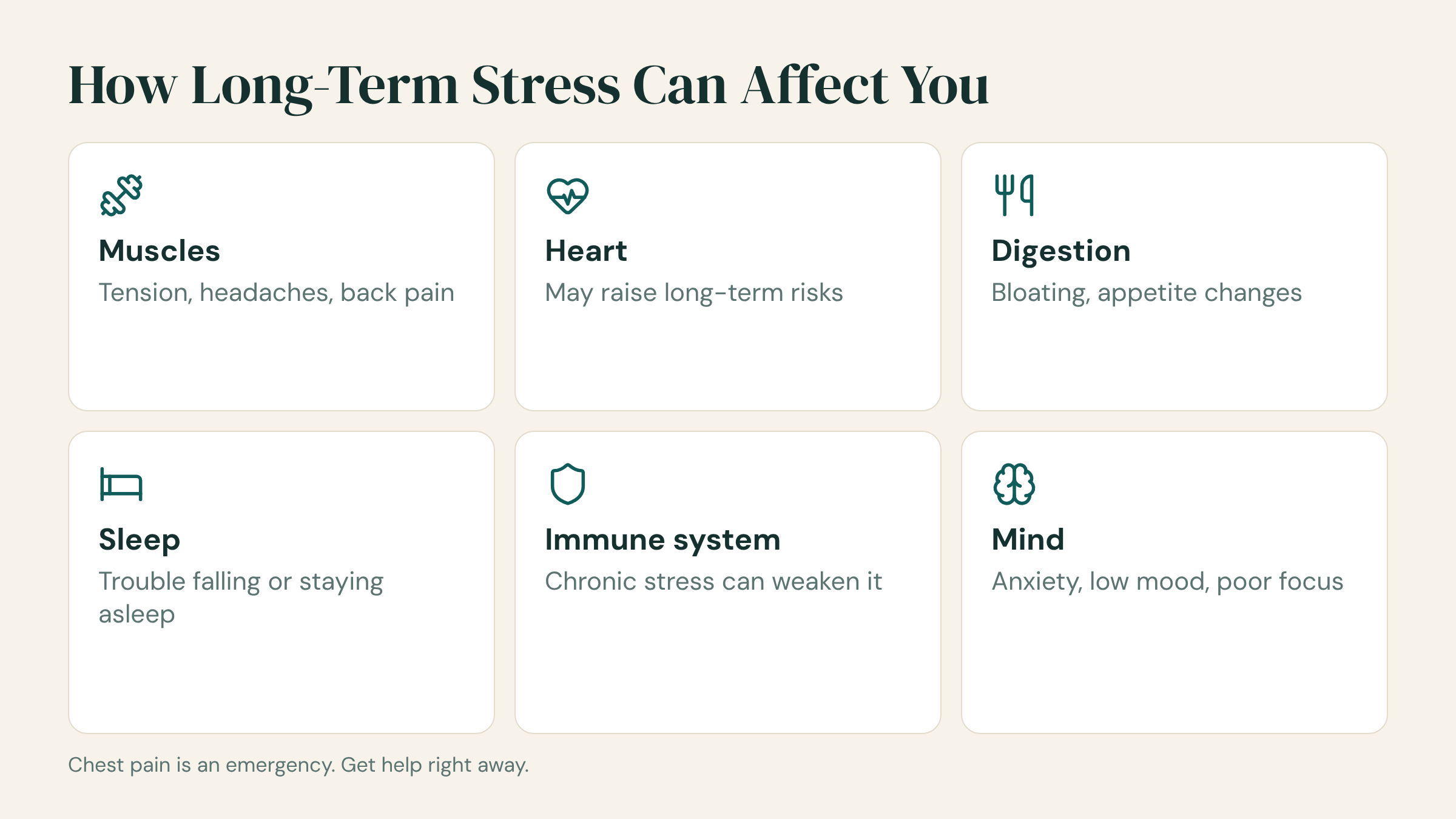
The American Psychological Association says chronic stress can keep muscles guarded for long periods. This is linked to tension headaches, migraines, and pain in the lower back and upper body.
Stress and Your Breathing
Stress can make you breathe faster and leave you feeling short of breath. For people with asthma or COPD, this can make symptoms worse.
Rapid breathing can also trigger panic attacks in some people. Slow breathing exercises can help you feel more in control.
Stress and Your Heart
In the short term, stress raises your heart rate and blood pressure. Over time, the APA says long-term stress may raise the risk of high blood pressure, heart attack, and stroke.
Inflammation in the blood vessels may be part of the reason. Stress can also lead to habits that harm your heart, such as smoking, drinking, or skipping exercise.
Chest pain is an emergency, not a stress symptom to wait out. Mayo Clinic says to get emergency help right away for chest pain, especially with shortness of breath, sweating, or pain in your jaw, back, shoulder, or arm.
Stress and Your Digestion
Many people feel stress in their stomach. According to the APA, it can intensify gut pain and bloating, change your appetite, and speed up or slow down digestion.
That can mean diarrhea for some people and constipation for others. Stress may also worsen heartburn, irritable bowel syndrome, and inflammatory bowel disease.
One common myth is that stress causes stomach ulcers. The APA notes that stress does not cause excess stomach acid or ulcers. Bacterial infection does.
Stress and Your Sleep
Stress and sleep often affect each other. Worry can make it hard to fall or stay asleep, and poor sleep can make stress harder to handle.
Mayo Clinic lists sleep trouble as one of the common physical effects of stress. Over time, this cycle can leave you feeling drained.
Stress and Your Immune System
Mayo Clinic says chronic stress can weaken the immune system. Cortisol can alter immune responses, and long-term stress may disrupt the way these systems communicate.
The APA links this disruption to chronic fatigue, metabolic disorders, depression, and immune disorders. Researchers are still studying how these links work.
Stress and Your Reproductive Health
In men, the APA says chronic stress may lower testosterone and sex drive, and it may contribute to erectile dysfunction. It may also affect sperm quality.
In women, stress may cause irregular or more painful periods and lower sexual desire. It can also worsen premenstrual and menopausal symptoms.
Stress and Your Mind
Long-term stress does not only affect your body. Mayo Clinic links it with anxiety, depression, and trouble with memory and focus.
The National Institute of Mental Health says to consider professional help if stress disrupts your life, leads you to avoid activities, or seems to be always present.
Warning Signs to Watch For
Everyone reacts differently, but these signs may mean stress is taking a toll:
- Frequent headaches or muscle tension
- Trouble sleeping or feeling tired all the time
- Stomach problems or changes in appetite
- Irritability or feeling overwhelmed
- Trouble focusing or remembering things
- Using alcohol, tobacco, or food to cope
These symptoms can also have other causes, so it is worth getting them checked.
What You Can Do About Stress
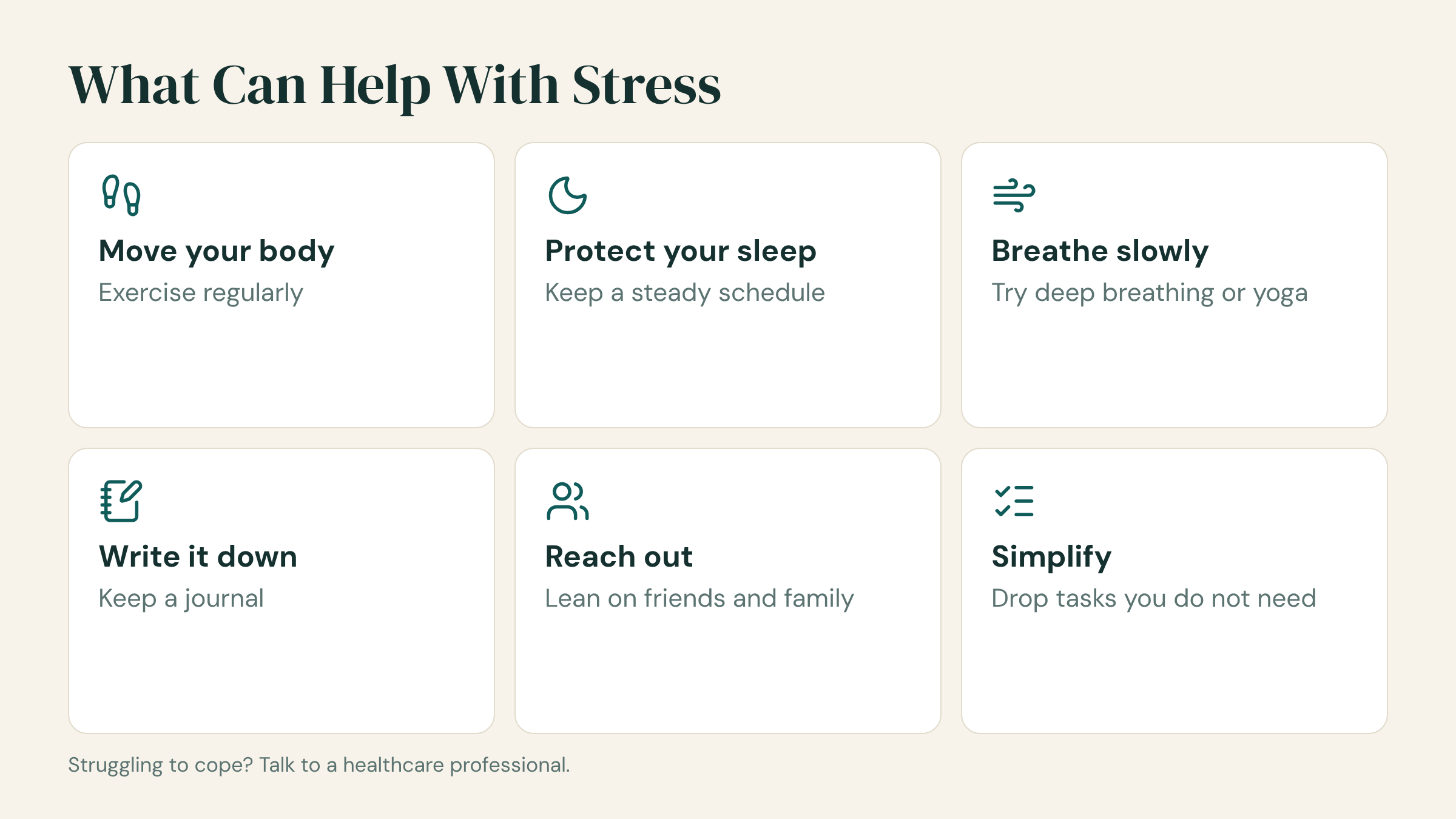
You cannot remove all stress from your life, but you can change how your body handles it. Mayo Clinic and the NIMH suggest these steps:
- Move your body: Regular exercise is one of the best tools you have.
- Protect your sleep: Keep a consistent sleep schedule.
- Eat regular meals: Healthy, regular meals help keep you steady.
- Relax on purpose: Try deep breathing, yoga, or meditation.
- Write it down: A journal can help you sort through your thoughts.
- Reach out: Lean on supportive friends and family.
- Cut back on caffeine: Too much can make you feel more on edge.
- Simplify: Organize your tasks and drop what you do not need.
When to Get Help
Talk to a healthcare professional if your symptoms do not improve or you are struggling to cope. Therapy can teach practical skills, and treatment is available for anxiety and depression.
If you are in immediate distress or having thoughts of harming yourself, call or text 988 in the US, or contact your local crisis service.
Is All Stress Bad?
No. Short bursts of stress can sharpen your focus and help you respond to a challenge. Your body is built for this, and it usually recovers once the moment passes.
The concern is stress that never switches off. The APA describes this continuous activation as wear and tear on the body. That is why regular recovery time matters as much as the stress itself.
Even small breaks count. A short walk, a few slow breaths, or a chat with a friend can give your body a chance to reset.
The Bottom Line: How Stress Affects Your Body
Short-term stress is normal, but ongoing stress can affect your muscles, heart, digestion, sleep, immune system, and mood.
Notice how stress shows up in your body and take small steps early. Regular exercise, good sleep, relaxation, and support from others can all help. If it feels like too much, reach out for help.
Related articles
- Melatonin: How Much Is Too Much?
- Foods and Drinks That May Help You Relax at Night
- How Much Sleep Do Adults Really Need?
This article is for general information only and is not medical advice. Talk to a healthcare professional about your symptoms, and before starting any supplement, especially if you take medication or have a medical condition.
2 Comments on “How Stress Affects Your Body Over Time”