
It is easy to treat sleep as optional when life gets busy. Yet it is one of the most basic things your immune system depends on. If you have ever come down with a cold after a stretch of late nights, you may have felt this link for yourself.
This guide explains how sleep affects your immune system and what you can do to sleep better.
Research supports that everyday experience. This article explains what happens to your immune system during sleep, what too little sleep can do, how much you need, and what you can do to sleep better.
The Link Between Sleep and Immunity
Mayo Clinic says plainly that lack of sleep can affect your immune system. People who do not get enough sleep, or enough quality sleep, are more likely to catch a virus such as a common cold after being exposed to it. Poor sleep can also slow recovery once you are sick.
Sleep does not make you immune to germs, and getting eight hours does not guarantee you will stay well. But it does appear to give your body better conditions for responding to them.
What Happens to Your Immune System While You Sleep
Much of the explanation involves cytokines, the proteins immune cells use to send signals to each other. According to Mayo Clinic, your immune system produces cytokines during sleep, and some of them actually help you sleep.
Your body needs more of certain cytokines when you have an infection or inflammation, or when you are under stress. Too little sleep may reduce production of these proteins. Levels of infection-fighting antibodies and cells also drop during periods when you do not get enough sleep.
This two-way relationship may explain why you feel so sleepy when you are ill. So when your body is telling you to rest during an illness, it makes sense to listen.
What Too Little Sleep Can Do
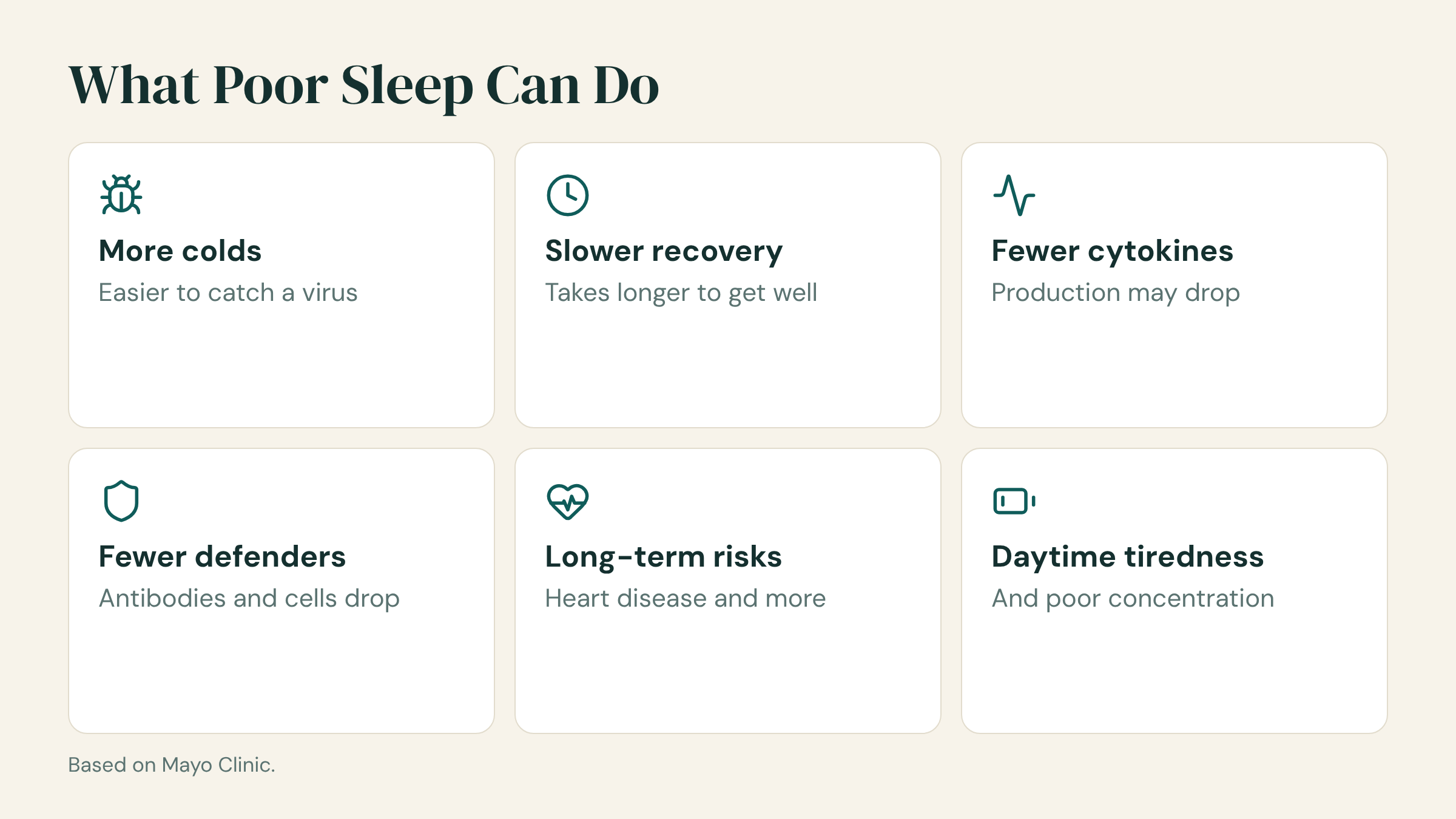
The short-term effects of poor sleep are familiar: tiredness, poor concentration, and low mood. Mayo Clinic links ongoing sleep loss with higher risks of:
- Obesity
- Diabetes
- Depression
- High blood pressure
- Stroke
- Heart disease
Some of these conditions can themselves affect immune function. Type 2 diabetes, for example, is listed by Cleveland Clinic among the conditions that can weaken the immune system. This means poor sleep may matter for immunity both directly and over the long term through its effects on overall health.
How Much Sleep Do You Need?
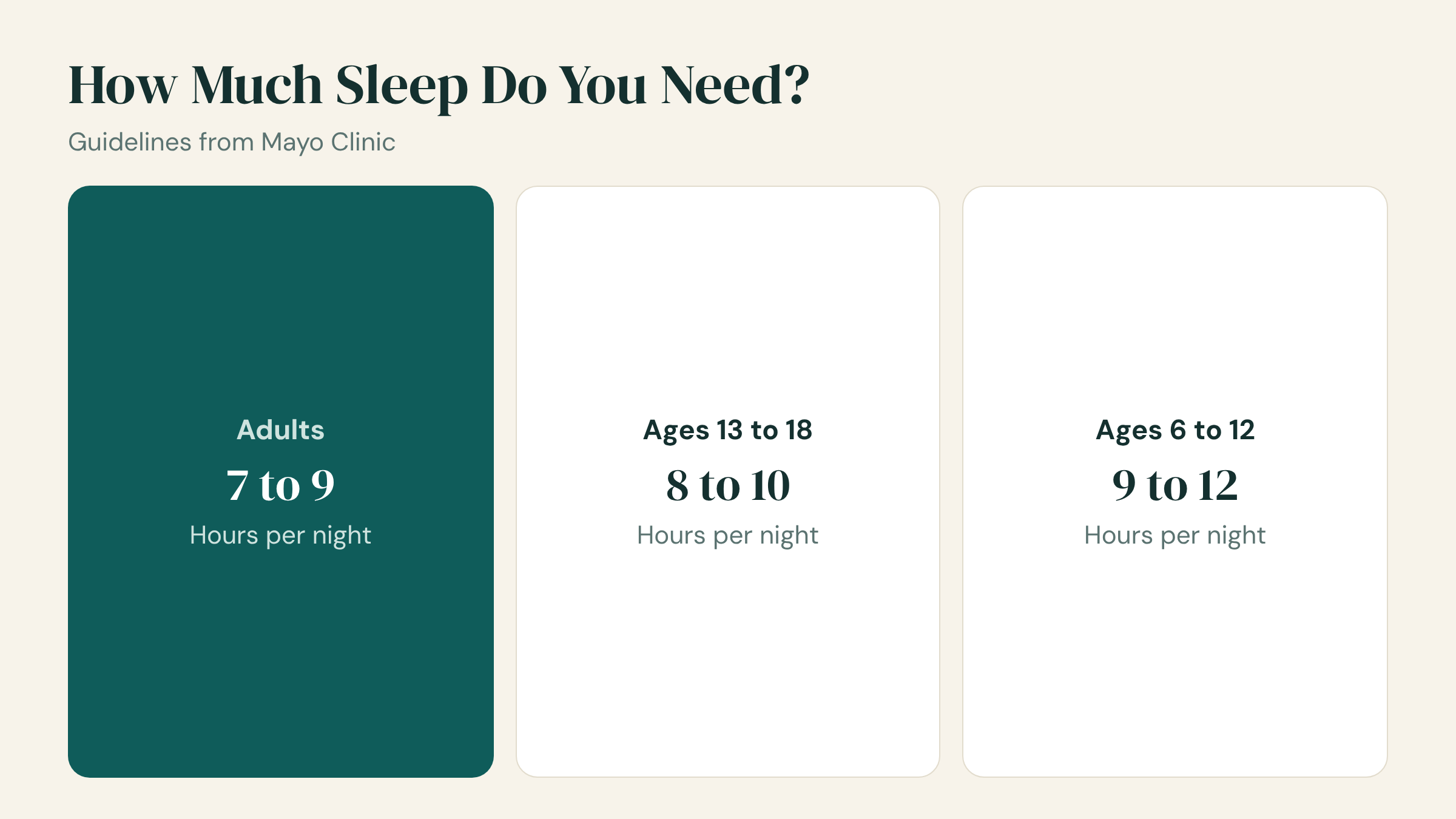
Mayo Clinic gives these general guidelines:
- Adults: 7 to 9 hours per night
- Ages 13 to 18: 8 to 10 hours
- Ages 6 to 12: 9 to 12 hours
- Ages 3 to 5: 10 to 13 hours, including naps
- Ages 1 to 2: 11 to 14 hours, including naps
- Ages 4 to 12 months: 12 to 16 hours, including naps
More is not always better. Mayo Clinic notes that regularly sleeping more than 9 to 10 hours may lower sleep quality for adults. Quality matters as well as quantity, since broken sleep can leave you feeling unrested even after enough hours in bed.
Simple Ways to Sleep Better
Mayo Clinic highlights going to bed and getting up at about the same time each day and keeping your bedroom comfortable. Other common sleep habits include:
- Keeping your room dark, quiet, and cool
- Avoiding caffeine later in the day
- Limiting alcohol close to bedtime
- Putting phones and other screens away before bed
- Getting regular physical activity during the day
- Getting outdoor daylight in the morning
- Having a short, calming routine before bed, such as reading or stretching
Consistency tends to matter more than any single trick. Choose one or two changes and stick with them for a few weeks before adding more.
What to Do When You Are Ill
When you are sick, give yourself permission to rest. Skip the alarm if you can, stay home if your symptoms allow it, and take a break from intense exercise. A stuffy nose or cough can make it hard to sleep, so raising your head with an extra pillow, staying hydrated, and using over-the-counter remedies as directed may help. Check labels, because some nighttime cold medicines contain alcohol or sedating antihistamines that are not right for everyone.
What About Sleep Supplements?
Melatonin, magnesium, and herbal products are popular, but they are not a shortcut to better immunity. No supplement replaces healthy sleep habits, and sleep aids can interact with medications. If you are thinking about using one, talk to your clinician or pharmacist first, particularly if you are pregnant or take other medicines.
Sleep and Vaccines
Vaccines work by training your adaptive immune system. Consistent sleep is a sensible part of overall health around the time of vaccination, but do not delay a recommended vaccine simply because you have slept badly. If you have questions about timing, your doctor or pharmacist can help.
When to See a Doctor About Sleep
Good habits cannot fix every sleep problem. Talk to a healthcare professional if you:
- Have trouble falling or staying asleep for several weeks
- Snore loudly or stop breathing during sleep, which can be signs of sleep apnea
- Feel very sleepy during the day despite enough time in bed
- Have an irresistible urge to move your legs at night
- Rely on sleep aids to get through most nights
Treating an underlying sleep problem may improve your energy and overall health, along with your sleep.
Can You Catch Up on Lost Sleep?
An occasional late night is rarely a problem, and an extra hour or two can help you feel better. A regular schedule is still the better goal, since long-term sleep loss is what Mayo Clinic links with wider health risks.
The Bottom Line: How Sleep Affects Your Immune System
Sleep is an important part of immune health. Too little sleep may make you more likely to catch a virus and slower to recover, in part because of changes in cytokines, antibodies, and infection-fighting cells. Aim for 7 to 9 hours as an adult, keep a regular schedule, and rest when you are ill. If sleep problems persist, speak to a healthcare professional instead of reaching for yet another supplement.
Related articles
- How Aging Changes Your Immune System
- Best Foods for Immune Support
- Why You Keep Getting Sick: Common Reasons
For more detail, see the official guidance from MedlinePlus: Healthy Sleep.
This article is for general information only and is not medical advice. Talk to a healthcare professional about your symptoms, and before starting any supplement, especially if you take medication or have a medical condition.
4 Comments on “How Sleep Affects Your Immune System”