Probiotics are no longer just for your gut. Dental probiotic lozenges, chewables, and drinks now promise healthier gums, fresher breath, and a better balance of mouth bacteria.
The idea makes sense on paper. Your mouth has its own community of microbes, and gum problems begin with bacteria. But does taking “good” bacteria really make a difference? The research shows some promise, but it is early, and the results are not strong. Here is an honest look at what we know.
What Are Dental Probiotics?
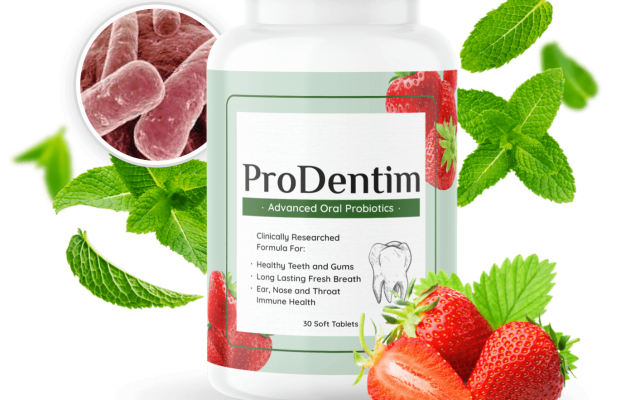
Dental or oral probiotics are products containing live bacteria intended to benefit your mouth. They are usually lozenges or chewable tablets designed to dissolve slowly so the bacteria come into contact with your teeth and gums. Studies have also tested yogurt, milk drinks, and chewing gum.
Strains that have been studied include Lactobacillus reuteri, Lactobacillus casei Shirota, Lactobacillus brevis CD2, and Bifidobacterium animalis subsp. lactis.
How Are They Supposed to Work?
The theory is that helpful bacteria may compete with harmful ones, or calm the body’s inflammatory response in the gums. One systematic review of experimental gingivitis, published in the Brazilian Oral Research journal, suggested any benefit came from changing the host’s response, not from removing plaque. In other words, a probiotic is not a way to clean your teeth.
What the Research Says About Gum Health
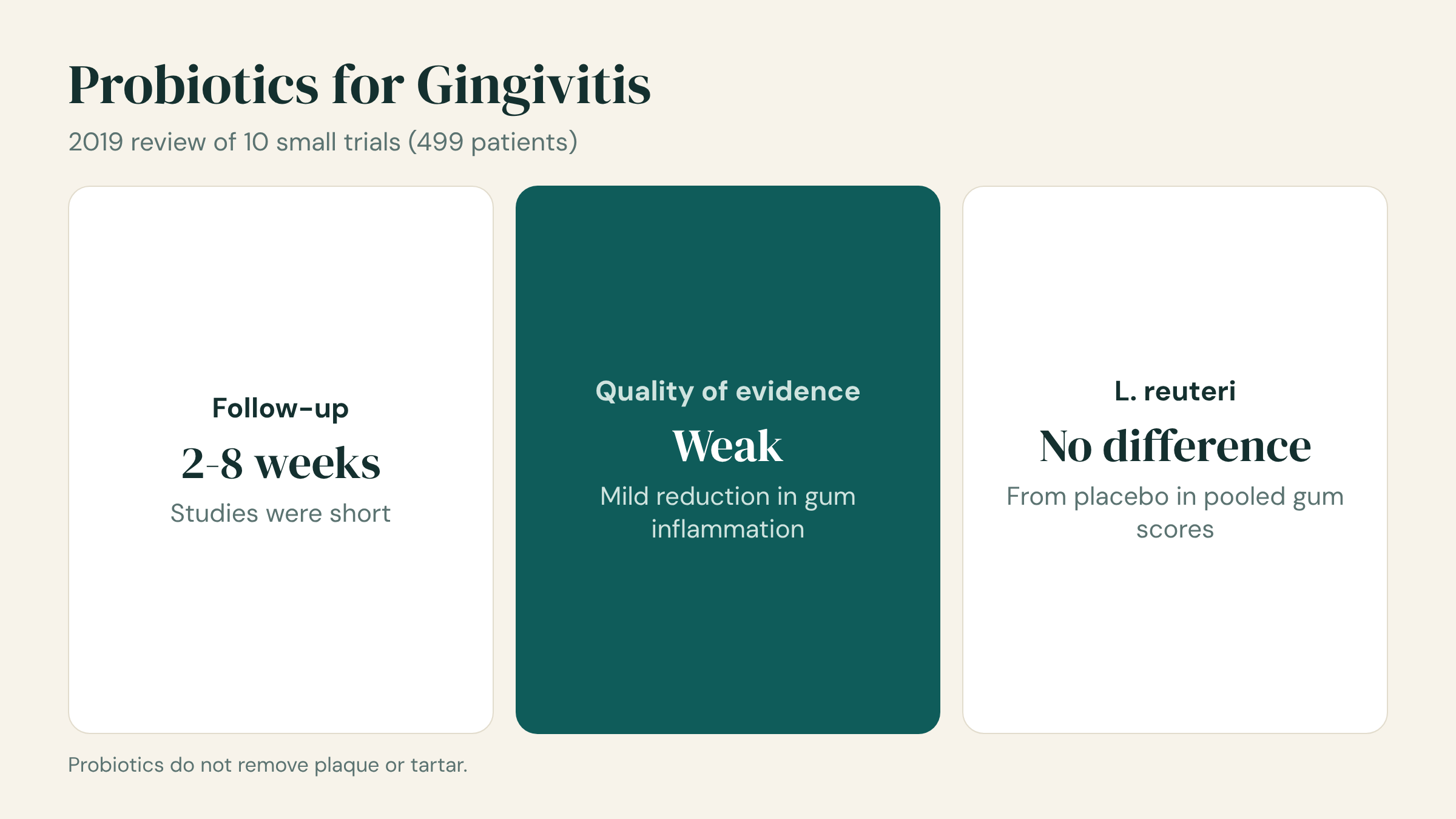
A 2019 systematic review and meta-analysis in the Australian Dental Journal looked at probiotics for gingivitis, the early, inflamed stage of gum disease. As summarized by the National Elf Service, it included ten small randomized trials with 499 patients, followed for 2 to 8 weeks.
Key findings included:
- All the trials reported some benefit at follow-up, and nearly half reported significant improvements.
- Bleeding on probing was 11.87% to 21.7% in probiotic groups, compared with 15% to 33% in placebo groups.
- For L. reuteri, pooled analysis found no significant difference from placebo in gum or plaque scores.
The authors called this “weak evidence” that probiotics mildly reduce inflammatory gum measures.
The experimental gingivitis review reached a similar conclusion. Five small studies, with 18 to 51 participants each and 4 to 21 days of follow-up, showed a slight clinical improvement, with varying results. The authors described the evidence as promising but preliminary.
Why the Evidence Is Limited
There are good reasons to be cautious:
- Small studies: Few people took part in each one.
- Short follow-up: A maximum of 8 weeks tells us little about long-term results.
- Different products: Strains, doses, and formats varied widely, which makes them hard to compare.
- Risk of bias: Several trials were judged to be at high risk of bias.
Results for one strain and product may not apply to a different lozenge sold online.
What About Bad Breath and Cavities?
Many products also promise fresher breath or fewer cavities. The reviews above focused on gum inflammation, so they do not support those claims. Since bad breath usually has a cause such as poor oral hygiene, dry mouth, or gum disease, it makes sense to address that cause first. If a claim sounds broad, ask to see evidence for that specific product.
Can Dental Probiotics Replace Brushing?
No. This is the most important point. Plaque is the main driver of gum disease, and only physical cleaning removes it. According to the National Institute of Dental and Craniofacial Research (NIDCR), once plaque hardens into tartar, only a dental professional can remove it. A lozenge cannot do that.
The foundations remain the same: brush twice a day with fluoride toothpaste, clean between your teeth daily, and see your dentist regularly.
Are Dental Probiotics Safe?
The NIH Office of Dietary Supplements says probiotics are considered safe for most people, but they may cause serious illness in very ill people and in those with immune problems. If you have a weakened immune system or a serious illness, check with your doctor first.
Read the ingredients too. Some products contain sugar, while others use sweeteners such as xylitol, which can cause gas or diarrhea in large amounts.
What to Look For If You Want to Try One
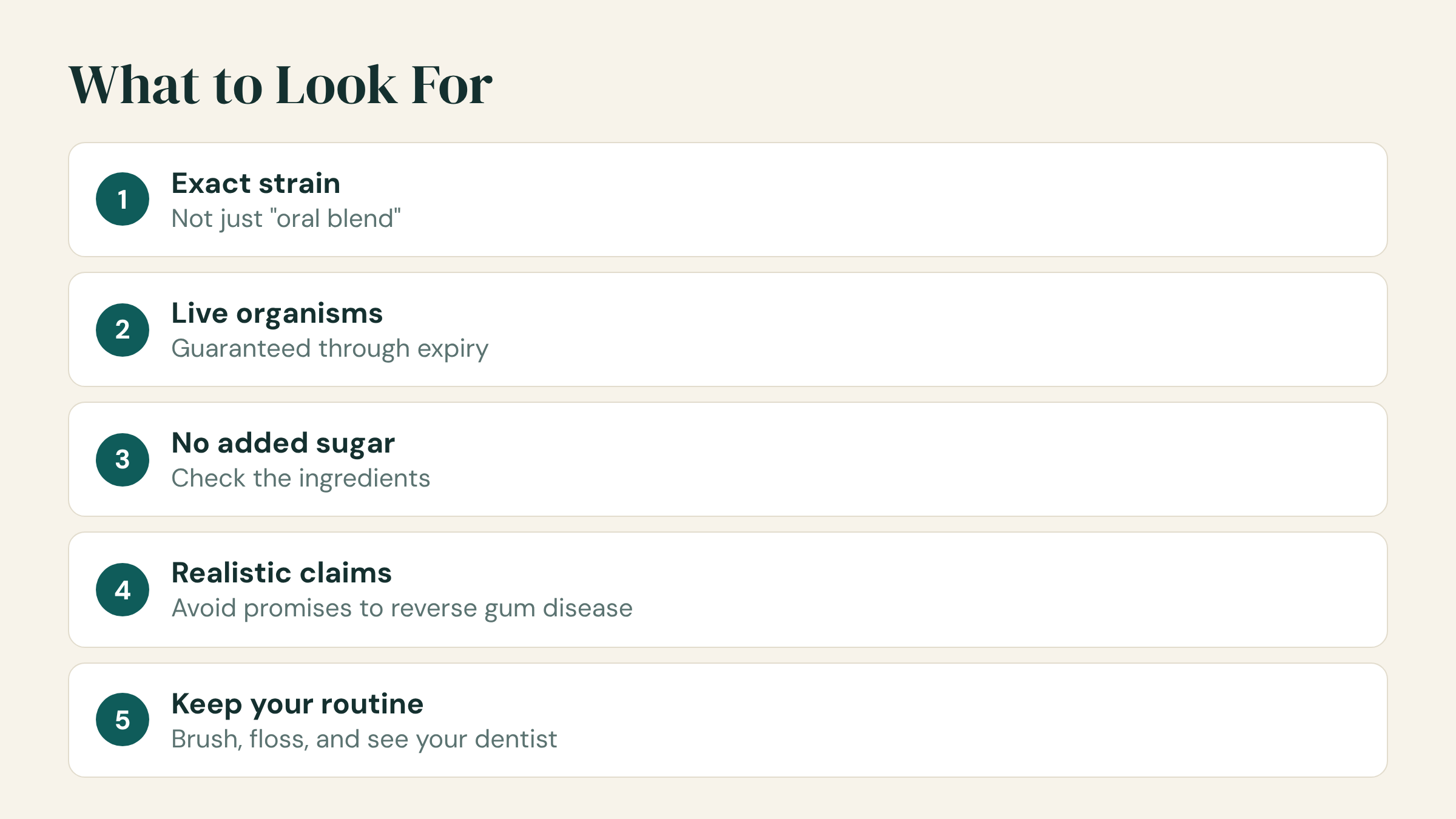
If you still want to try a dental probiotic, these tips can help:
- Look for the exact strain listed on the label, not just “oral probiotic blend.”
- Check that the number of live organisms is guaranteed through the expiration date.
- Choose a product without added sugar.
- Be wary of claims that it can reverse gum disease or replace dental care.
- Follow storage directions, since live bacteria can be sensitive to heat.
- Tell your dentist so they can watch for changes.
Give any product a fair, limited trial, and stop if you notice no benefit. If you have bleeding or swollen gums, get them checked first, because a supplement could delay needed treatment.
When to See a Dentist
See a dentist if your gums bleed, feel tender, or look swollen, if your teeth feel loose, or if you have bad breath that will not go away. These may be signs of gum disease, which needs professional care.
Questions to Ask Your Dentist
If you are considering a dental probiotic, a short conversation with your dentist can save you money. It is worth asking:
- Do my gums show signs of inflammation, and what is causing it?
- Is there tartar that needs professional cleaning first?
- Would improving my brushing or cleaning between my teeth make a bigger difference?
- Is there any reason this product would not be suitable for me?
Your dentist can also compare your gum health before and after, which is a more reliable measure than guessing how your mouth feels.
The Bottom Line
Dental probiotics may slightly reduce gum inflammation, but the evidence is weak, based on small and short studies with different products. They do not remove plaque or tartar, and they do not replace brushing, flossing, or dental care. If you are curious, talk to your dentist, choose a clearly labeled product, and keep your expectations modest.
Related articles
- Best and Worst Foods for Your Teeth
- Does Oil Pulling Work? What the Research Says
- Are Oral Health and Heart Health Linked?
For more detail, see the official guidance from NCCIH: Probiotics.
This article is for general information only and is not medical advice. Talk to a healthcare professional about your symptoms, and before starting any supplement, especially if you take medication or have a medical condition.